The NBS Digital Construction Report is now in its second decade. It was published last week and is available at the interactive website below: - https://www.theNBS.com/dcr2021
This blog post looks at some of the findings. But before looking at the finals, a quick note to thank a large number of industry leading organizations that help us distribute our surveys within the industry.
Partner organizations and our chosen charity
The first section of the report looks at BIM in general. The most fascinating areas of this analysis for me are always the questions looking beneath the headline of 'have you adopted BIM?'. A lot of the industry defines BIM in different ways, so specifically asking about use of EIRs, responsibility matrices, classification, following standards always gives a better picture.
Under the headline figures
The above chart shows that the principles within the 19650 series of standards are starting to be followed in terms of revision control, naming conventions, indication of suitability and classification. Looking just at the UK, use of Uniclass 2015 is now at 50% on 'BIM projects', but lower at 39% across the wider worldwide participants.
The second part of the survey looked more at technology.
Technology advances
The above chart shows that cloud computing is now dominant. Other findings in the report showed how much the COVID crisis had accelerated digital working and new 'work anyway' working practices. In terms of wider new construction technology - half of participants had been involved in a project using offsite techniques.
The rising star at the bottom end of the scale was Digital Twins. I consider this a little similar to 'BIM' as a bit of a catch-all phrase. Technology within a building around access control, intruder detection, CCTV, wifi hotspots has had an element of 'digital twin' for many years now. How much real time digital feedback do you need before you tick the 'digital twin' box? And will we get back into the 3D visual model debate again?
The final section of the report looks at the wider industry.
Where will you be working?
Only one in five participants expect to go back to 'normal' in the next five years. We're undoubtedly in a period of change.
Thanks to everyone that took part in the survey - over 900 - and thanks to the increasing number of participants from around the world that clearly are aware and appreciate the work NBS do in this area.
One third of participants are from outside of UK now
I've always loved cool technology, and finally DJI have released an absolutely awesome drone that just about made it into my price range.
The DJI Mini 2 has all of the great features you'd expect from a top of the range drone, but for a few hundred pounds instead of approaching the thousand pound mark.
Check out the awesome footage I managed to take (on a reasonably windy day) after just watching one or two youtube tutorials...
To get the shots in the above video I used the 'Circle' QuickShot mode. You take it out to about 50-60m from the target, click 'Circle', then tap the target and click Go. The drone does the rest. Amazing footage without needing any real flying skill.
With NBS Chorus and NBS Source, our vision is to (a) first and foremost to produce best-in-class platforms with great user experience and then (b) to open up the data for partners and those with basic programming skills to use.
With both, we have loads of exciting functionality planned for the main platforms, this means that opening up the data access will take a little longer. However, we do allow users to export specifications to the well-structured DOCX format.
Primarily this is for manipulation in Microsoft Word. But as a secondary point of interest, this means that hobbyist programmers can play with the data.
Last Saturday morning @mgjspidey on Twitter let me know that he'd written some code to generate a Revit Keynote file from the DOCX output. As I used to enjoy a bit of programming a while back, I took this as a challenge to dust off the old coding fingers and write some sample code that I'd share with the community. Having some spare holiday days mixed with Covid lockdown boredom also helped ;)
As the most accessible coding language for Microsoft Office is probably VBA, I wrote some code and popped it up on GitHub.
Summaries of the four use cases are below. Feel free to download and amend the code to create your own use cases.
1. Microsoft Word Macro - Generate Keynote file from Chorus specification
Use case: Revit LT users cannot use the NBS Plug-in for Revit. So a keynote file is required for making annotations.
Coding solution: Open the DOCX file - run the macro - generate the keynote file.
NBS plan: Intend to implement in this within Chorus in 2021, in particular for small works customers.
Generate keynote file from published specification
2. Microsoft Word Macro - Prepare NBS legacy word-processing for importing into Chorus
Use case: NBS customers may have old word processing versions of NBS they want to import into Chorus as record/historic specifications. Unfortunately, the historic word processing format used does not have structure to it.
Coding solution: Open the DOCX file - run the macro - convert to a file that imports cleanly.
NBS plan: Incremental enhancements to the MS Word import feature will continue to be made.
The word-processing file format for the last 25 years :)
The macro loops through the document giving it structure
...and then import well-structured content into Chorus
3. Microsoft Word Macro - Prepare stylesheet for uploading to Chorus
Use case: It can be quite time consuming to change the colour and font-style for all styles in an NBS print template document.
Coding solution: Open the DOCX file - run the macro - change all of the fonts and colours instantly.
NBS plan: No plan at this stage to develop this into the main software
Choose your heading colour and document font
All changes are made
4. Microsoft Excel Macro - Generate a pricing document
Use case: On small jobs that don't of bills of quantities, a priceable spreadsheet with specification references may be useful.
Coding solution: Open the XSLM file, specify which DOCX file to look at - run the macro - generate the pricing spreadsheet.
NBS plan: Intend to implement in this within Chorus in 2021, in particular for small works customers.
Browse to the DOCX file and click the button
Pricing sheet generated from specification sections
Calculation and currency field types added
I do realise that programming and working with data like this is not for everyone. But hopefully this will spark of other ideas of what the data inside specifications can be used for - ideas worked on can turn into well-worked functionality that makes it into the main product one day too.
It's always good to co-present with someone who can give real-life project example. It adds a bit extra over and above the theory of how it should work. The two examples in question where both BDP projects in Scotland - one a huge railway station project and another a smaller new build primary school project. It was interesting to see the commonality between the two projects with respect to digital structure and process.
To watch the full presentation on the AU website click the first link below.
To watch a few 60 second snippets and read a bit of an overview, click the second link to go to the NBS website.
Over recent years, using the cloud has allowed me to connect applications and data together inside and outside work.
Looking at examples from outside work, it's so easy to embed a youtube video within Facebook - or transfer the data from a fun run from Garmin to Strava - or buy a book on the Amazon App and then see it on my Kindle. The cloud has revolutionized the way we interact in our daily lives.
When working on NBS Chorus, as a cloud based tool we expected that this would transform the way the industry interacted with specifications. We were aware of some immediate transformational benefits such as (1) functioning on other devices other than PCs (Mac, Tablet, Chromebook etc...), (2) the ease at which contributors can be added to a project and (3) the end to problematic installation of software and content on local machines/networks.
However, now that Chorus has been released - it's great to see some additional cloud benefits.
A special shout out here to Rob Jackson from Bond Bryan Digital (plug below - check out their services) for tweeting a few of the workflows he has managed to get Chorus linking to open data methodologies.
We recently published our NBS Construction Technology Report. This was a survey of over 500 construction professionals, mainly based in the UK. This was a healthy sample size based on the number of construction professionals in the UK.
The report is a mixture of an analysis of the survey and also some opinion pieces from small, medium and large sized organisations that are pushing the boundaries with technology in the industry. We also received a thought-leadership piece from Microsoft (rather than single out one of the construction tech firms that more traditionally lead the design tech or construction tech spaces).
Some snippets below in this blog post. Link to download the full report for free at the bottom of the post.
One final point to address, we know that technology is not the only of topic of importance in the industry. We have previously published surveys into sustainability, contracts+law, specification and BIM - but we thought that technology is such a game changer, that it deserved a report of its own.
The report is opened with an introduction from NBS Chief Exec Richard Waterhouse
Opinion piece from Ben Highfield Microsoft looking at how leaders can adopt digital technologies to achieve their goals
An article from myself, looking at external drivers, technology opportunities and the power of structured data in the cloud
Last year we surveyed hundreds of construction professionals to understand what technology they were currently using to get ahead. We also asked for their opinions on where technology was going with respect to construction industry.
We are putting the final touches to the report now.
If you want a free copy to find out how the AEC industry is currently modelling, collaborating, checking data, specifying, viewing data etc... - sign up at the URL below.
The following article from myself gives my thoughts on the report and subject in general...
30/11/18 Original blog post...
Today I presented at Autodesk University. It was videod and when available I'll embed the video of the session within this blog post.
As a blog review, I include three video sequences from what I presented. I remember receiving presentation training a few years back, the lady that delivered the course told us that most of the audience will remember three things maximum. So here are three things :)
1. A digital future is needed
There have been a number of industry reports published recently. All point to a digital future for the construction industry. Download these from the hyperlinks below.
2. Specification and model together
A 3D model of a design can only contain a certain amount of information. The majority of the words describing the design are contained in the specification. This information should not exist in two silos - but must be coodinated.
The video below is a short 30 second sequence showing the model and specification being accessed in the cloud. This is a preview of functionality that will be added to NBS Chorus in 2019.
3. A required digital audit trail is needed
The final take-home message is that it is not just the latest information is needed. An audit trail of the decision making process is needed.
Consider the 'in use' stage of a building and a door needing replaced, how do the decision makers determine whether the suggested product is of an equivalent or better performance than what was installed? How do they determine whether this meets the initial design requirements?
This is what the industry must aspire to. This is the transparency that is needed.
The class handout with additional content can be downloaded from:
A quick blog post to mention that our NBS Research Team have been involved in another interesting industry report that is free to download. Working with the RIBA and Microsoft we have published the 'free to download' Digital Transformation in Architecture report.
Having blogged about the recent Contracts and Law and BIM report already in the last four weeks, it's great to be able to talk about even more output in this area.
This report is the output of in-depth interviews and also surveys that involved over 300 architects. It looks at how new digital technologies are allowing for productivity enhancement and also improved client services.
9 out of 10 of the industry agree that digital technologies are currently transforming the industry works. The industry is also of the opinion that BIM is now maturing and, in turn, is reducing costs and lowering risks on projects.
There are plenty of extracted opinions from the survey throughout the report. In addition, there are short opinion pieces from industry professionals such as Aaron Perry from AHMM and Dale Sinclair from Aecom.
The report ends by looking at future trends and the following chart is an interesting one:
Emerging technologies
The NBS research team conducts research across a wide range of topics and for many different clients:
Top marks to the BIM Show Live team and the delegates for putting on a fantastic show this week despite of the worst snow in Newcastle for the last decade.
A review and some useful links from some of the sessions below...
1. Dave Philp, Digital Built Britain
As always with BIM Show Live, Dave Philp opened the show. He arrived on stage with an electric guitar player playing 'I would walk 500 miles', which was fitting considering the weather conditions and the public transport options to get to the conference!
Dave gave an update from Digital Built Britain. He promoted the success of the standards, the difference this was making at home and the recognition this was getting overseas.
There was a mention of ISO 19650 parts 1 and 2 which are now well progressed and looked at the influence the PAS 1192 standards have had over these.
Looking to the future, the Government want to create a 'National Digital Twin' of the countries physical infrastructure. But let's get the foundations right.
2. Rob Charlton, Space Group
Rob gave the state of the nation address. He reflected on previous years where he looked at which disciplines were adopting BIM and which were not. Rob now believes everyone is committed. He then looked at some examples that he sees through his BIM Technologies business. The big private sector clients, the big tier one contractors and the university estates and building teams - all now fully committed to a digital future.
The Boiler Room in the North East - Where Innovation Happens
(like the design for the steam engine that was used for 150 years)
Is everyone perfectly adopting the PAS 1192 standards? Maybe not, but it's not similar to ISO 9001. Where we may not be perfect. But the majority are now 'there or thereabouts'.
AI, Blockchain, VR and AR were identified as emerging technologies. But then there was a reflection on Carillion going out of business and the disaster that was Grenfell. Why is the construction industry on the front page of the newspapers for the wrong reason.
How can we check that what is specified is specified correctly and then is followed through on site? There used to be a clerk of works working for the client that gave reassurance on quality. Can we use new technology to provide a 'digital clerk of works' checking that the products specified are installed and the quality levels specified are followed?
Personally speaking, this message is one that the data providers and software companies can help with. Provide standardised data structures, provide technology that helps coordinate this and provide technologies that help provide transparency of decision making.
3. Anders Hvid, Dare Disrupt
Anders looked at how digital technologies have changed and are changing the world.
He started by looking at the improvements in robotics in recent years.
When looking at the difference between small improvements vs revolutionary disruptions he gave two examples:
- Kodak improved by taking their film capacity from 24 to 36 to 44 photographs. With digital you can now get 100,000 photographs on a 128MB memory card for £20.
- Opening a bookshops costs roughly the same every time you open a shop. Selling books digitally costs are very similar whether you sell 100 books or 1,000,000.
When Apple released their phone. It didn't do converstions as well as Nokia - poorer quality audio and a rubbish batter life. But users accept a little pain to get future gain. The lesson being that you may have to go through a little pain at first before seeing big enhancements.
4. Sarah Rock and May Winfield, UK BIM Alliance
Sarah and May presented their BIM+Legal report.
The Winfield Rock Report
One of the headline recommendations is saying 'This is going to be a BIM project' or 'This is going to be a BIM Level 2 project' isn't enough. As part of the contract documentation a set of Employer's Information Requirements and responding BIM Execution Plan is what sets the rules of (a) what is expected and then (b) what is agreed at the start of the project.
The BIM Level 2 standards give the framework, but on a specific project the rules must be agreed within this framework.
5. Paul Swaddle, NBS
My colleague Paul Swaddle did a session on cyber security and it was fascinating with lots and lots of good links. A selection of these are below that are definitely worth reading:
"Do the best you can until you know better... ...then when you know better, do better"
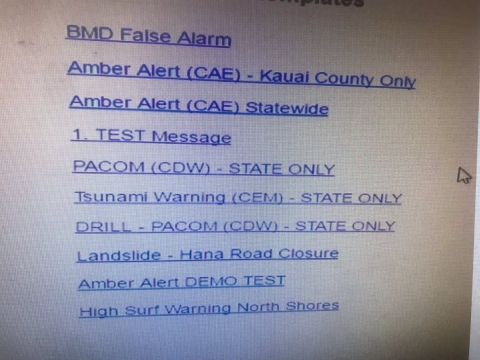
Finally, apparently this was the user interface that controlled the Hawaii missile alert systems:
Which link am I supposed to click?
6. My session
My session at 4pm on day two was slightly late in the day considering that red and orange weather warnings across the country telling people to get home :)
However, I really appreciated those that stayed back to take part.
Three - Consider how emerging technologies can help you
I looked at AI and AR and the rise of the cloud and big data.
I then reflected back on the challenge that Rob Charlton set at the start of the conference about creating a 'Digital Clerk of Work'.
A couple of video sequences below, click play and then maximise the screen if you'd like to see them:
Structured digital data = greater clarity and transparency
Publish a coordinated model and specification to the cloud
Finally, we've just posted a great team case study on theNBS.com of a collaborative team working to BIM Level 2 on a school project. Short video interviews with the client, the contractors, architect, building service engineer and structural engineer. Please check it out and share:
Last year I was interviewed by the CBI on emerging technologies and the construction industry as part of their Innovation Survey. I received a hard copy of the resulting report a few days ago and it was nice to see a quote from that interview included...
CBI Report on Disrupting the Future
The report focuses on the three technologies that the survey suggested would have the biggest industry impact in the upcoming years.
It's a free report that gives an introduction to each subject, then insight into likely adoption patterns, opinions, case studies, barriers, recommendations and tips. Download now for free to have a read:
Some bits and pieces that I highlighted from the report are below:
Introduction:
Adoption of technology is essential to raising productivity, spreading properity and opening-up new paths for growth.
Artificial Intelligence, Blockchain and the Internet of Things are set to go mainstream.
The Internet of Things unlocks data. Artificial Intelligence solves problems. Blockchain changes how businesses exchange value.
A third of companies declare themselves 'early adopters' of technologies. A quarter of companies declare themselves as 'followers'.
Artificial Intelligence:
Has transitioned from programmed 'intelligent' behavior (the enemy in a computer game) to 'neural networks' that work in a similar way to the human brain.
Over the next five years AI holds the top spot as the technology set to impact across all sectors
90% of the world's data has been created in the last 24 months
Although not yet used in construction, around 35% expect to use it within the next five years. However, almost 50% of technology companies already use it.
75% of businesses recognise that AI will help with prediction and pre-emptive decisions
Block chain:
A virtual record of transparent, secure, transactions
In terms of data, the cloud and the internet of things there are many examples of how this revolutionising the world around us. Whether this is Fleet Management of Trucks, Smart Retail or Smart Motorways - 'things' (trucks, products, cars) are given a data structure. Sensors then report on the real-time performance of these things by push information into this data structure in the cloud. Decisions can then be made based on past and existing performance to improve existing or future performance.
I enjoy running. And one thing that has made this hobby more enjoyable in recent years is 'seeing the data'.
Last year I bought a Garmin Watch and I am completely fascinated by the data analysis it offers.
For example, the runner, the route and the conditions are given a data structure. For example:
The runner
Age
Weight
Heart rate
Steps per minute
The route
Distance
Elevation
Location
The conditions
Temperature
Wind
Time of day
It's then the job of runner to go for a run, and a sensor to report the data up to the cloud.
Example 'run stats' below show a distance of 10.07km, a time of 55:14, an elevation gain of 207m (thanks Durham!) and a temperature of 2.8 degrees. The only manual effort from the runner here was giving the run a name 'Four hills challenge' and tagging it by the type of run 'training' (oh, and the small effort of running it!).
Key data
In terms of adding an x axis for duration it is possible to plot elevation, pace, heart rate, cadence against time. In the example below, there is a clear correlation between heart rate and when the extra effort was put in for the hill climbs.
(One criticism for the Garmin Team - The scaling of the elevation is poor for the y-axis. The chart in green below doesn't show how horrible this run really is - 42m to 88m climb out of Durham city centre is agony!)
More detailed data
The ability to break down a race into 'splits' - for example 1km splits - allows the runner to monitor real time progress. For example, if you want to run a 25:00 parkrun. If you do your first km in 5:30 then you know you have to speed things up a bit.
Breaking down the data
The heart rate monitor is also a nice touch to see how hard your body is actually working.
Time spent in each heart rate zone
It's good to see the data from one run, and as every run has the same data structure, there is a lot of power in the ability to look across a number of runs. In the example below the filter query is 'Show all runs classified as 'training', 'between the date range of 1/1/17 and 31/12/17' and sort by 'most hilly'.
Querying across the wider data set
With the data being on the cloud - it means that access is possible from any device. Your watch, your phone or your computer. The same data - just different user experiences based on context and available screen size.
One set of data - access anywhere
Going one step up the data tree - from run, to runs to everyone's runs - if you are prepared to share your Garmin data - then you get lots more data and insight back in return.
One very nice feature is the ability to create 'Segments'. On a route, someone records a start and finish point, and creates a 'Segment' on the cloud. All runners that then run through that segment at any time then have their best time recorded.
The example below shows a lap of the Consett Parkrun circuit. The data shows every Garmin runner who has gone through that segment. It then allows you to benchmark yourself against them. Any part of the world can be set up as a 'running race' where you are racing against virtual ghosts of previous runners - which is pretty cool. In the future, I am sure augmented reality running races will be taking place around the local parks where you can race against yourself!
(Note - A little more care needed for cyclists).
Benchmarking over a specific segment of land
Finally, over a given time period, you can benchmark your efforts against the running world. How did running for around about two hours last week match up to the rest of the world?
Benchmarking against the other runners in the Garmin community
...and how is this relevant to construction???...
Most of my blog posts are around digital construction. So it is a fair question to ask what this has to do with other items on this blog?
Well consider 'the run' equivalent to a building or a manufacturer product. Consider a shared data structure. Consider a sensor pushing performance data to the cloud.
Would it be useful to be able to see how this is performing over time? Would it be useful to compare this performance against the rest of a client's portfolio? Would it be useful to share this data securely with a community and benchmark the performance against similar buildings/products regionally, nationally or globally?
The answer of course is 'yes'.
Data, the cloud and the internet of things is going to change the construction industry. We'll have the most incredible feedback loop which will be used to improve how we operate assets in the existing built environment and how we design when working on the next generation of projects.
- and if anyone fancies a run - hopefully see you at AU5K later in the year!